Yoga therapy
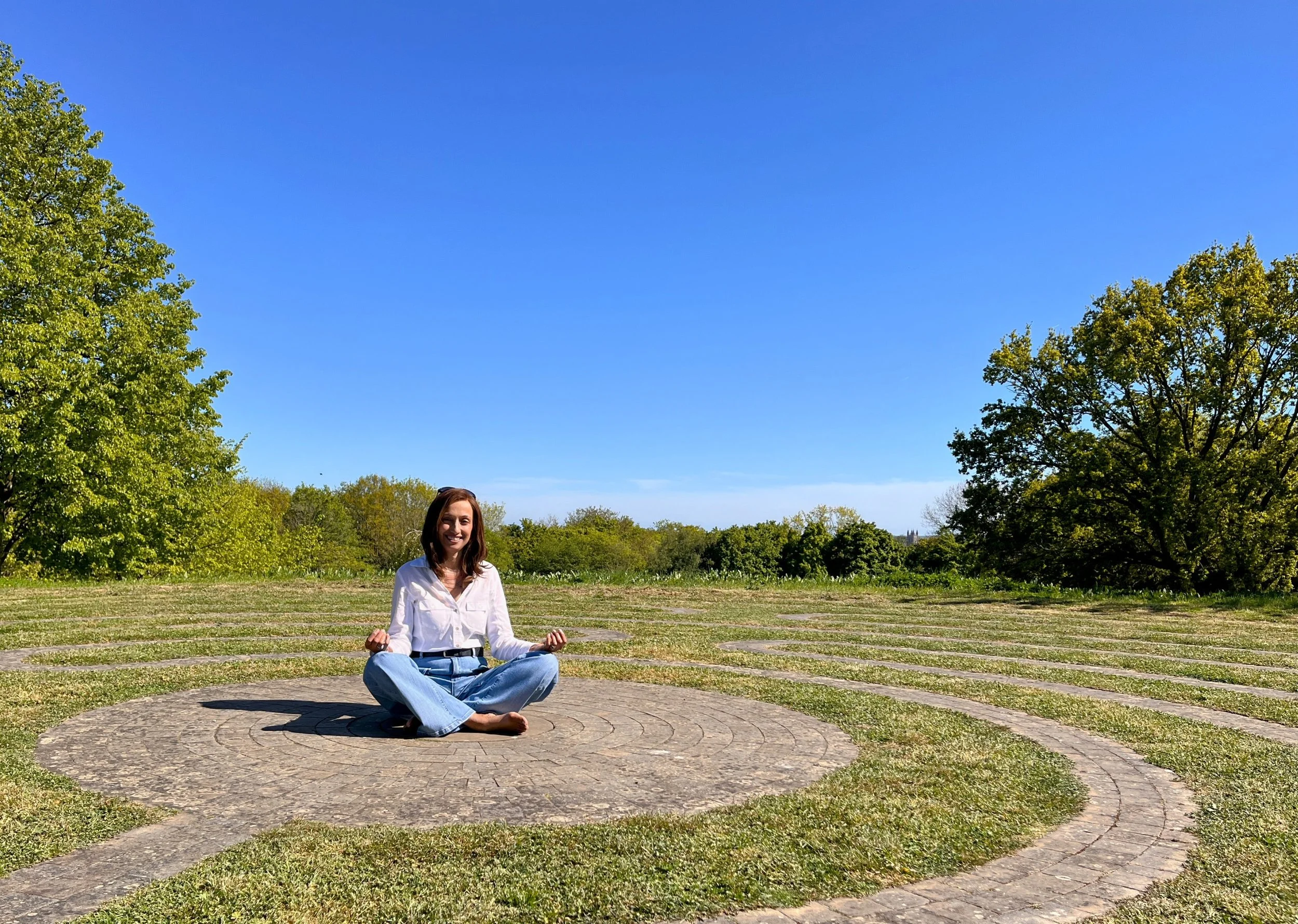
My yoga philosophy
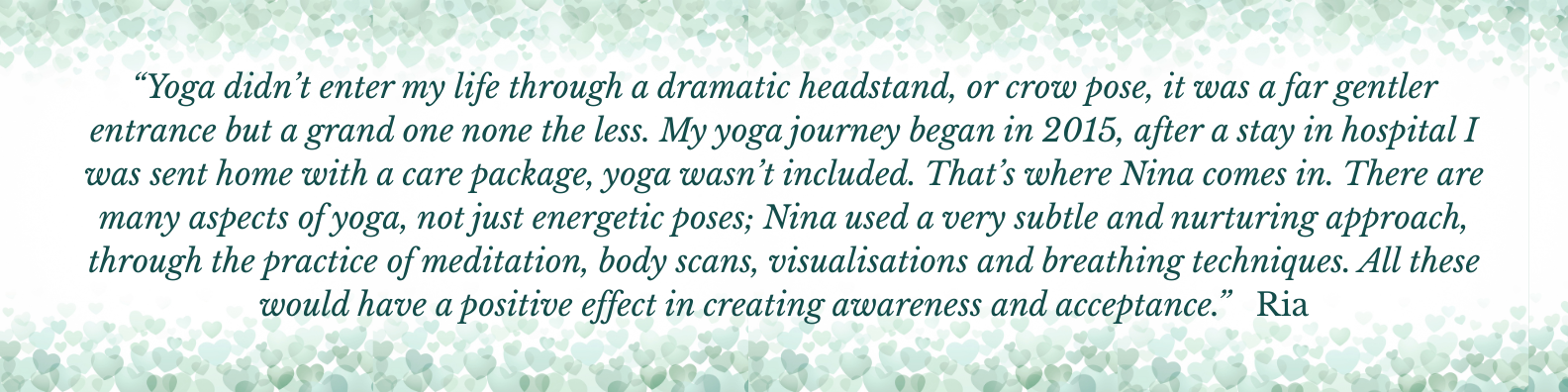
Yoga therapy offers a gentle, compassionate way of understanding and working with stress, trauma and emotional difficulty through the connection between mind, body and breath. In my experience as both a psychologist and long-term yoga practitioner, challenges can often be understood more clearly when the mind becomes calmer and less reactive. While mindfulness can bring awareness to emotional pain and the effects of trauma, practices such as yoga, movement, breathwork, compassion and embodiment can help us feel safer, more grounded and more connected to ourselves. I offer a trauma-informed and holistic approach that honours both psychological understanding and the wisdom of women's bodies.
Yoga offerings
One-to-One Yoga
Tailored to your need, settling your mind, and connecting to the body through movement.One-to-one Trauma Informed Embodied Yoga Therapy for Women’s health
Small Group Sessions
Practice gentle but effective yoga alongside like-minded participants
Embodied Yoga Therapy
I offer Somatic/Embodied Yoga Therapy using both “top-down” (mind-to-body) and “bottom-up” (body-to-mind) approaches.
Yoga can help regulate the autonomic nervous system and support balance through awareness of the subtle relationship between mind, body and breath. Through gentle, adapted movement we develop:
interoception (awareness of internal bodily sensations)
proprioception (awareness of the body in space)
embodiment and grounded presence
psychological flexibility and emotional regulation
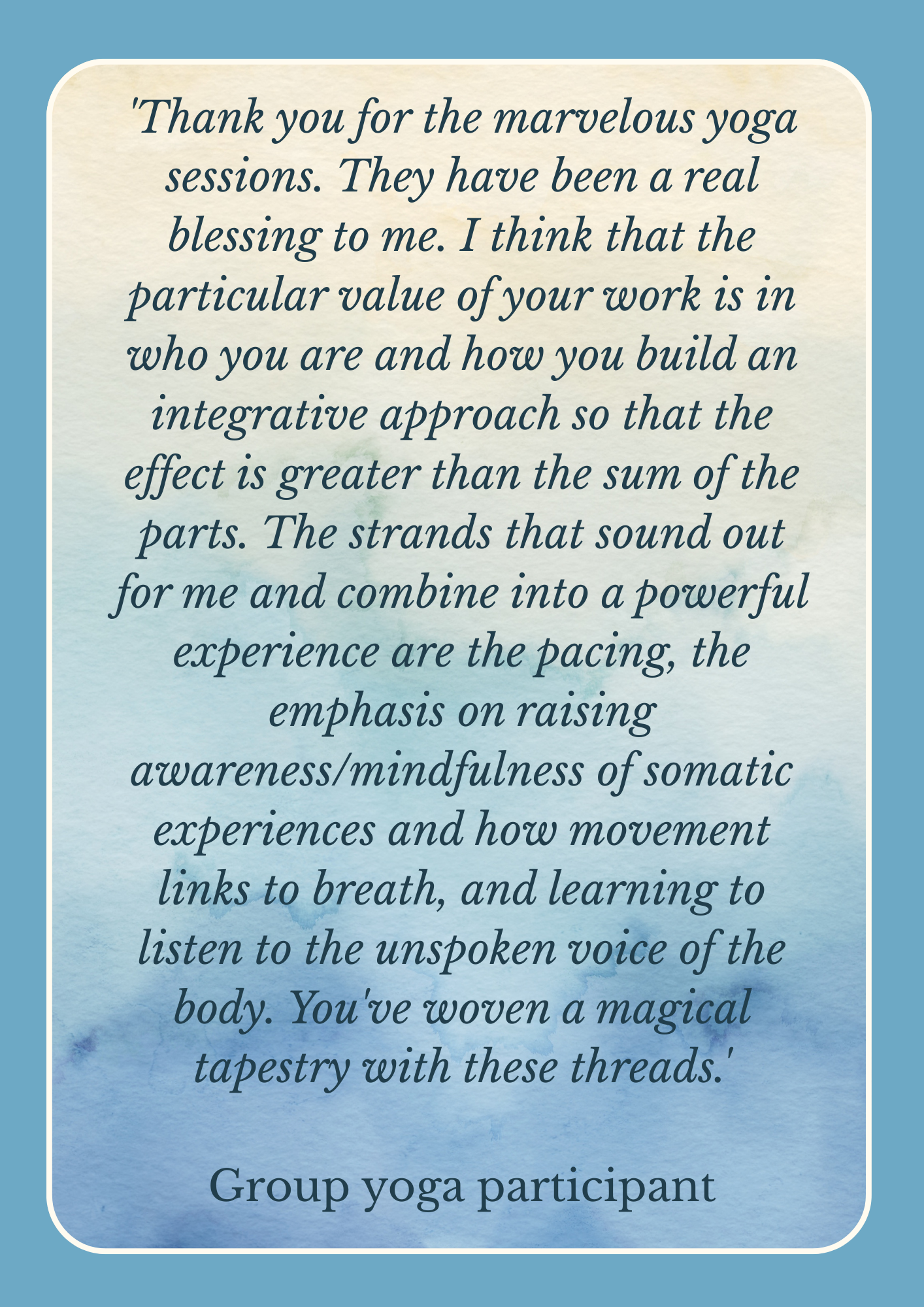
Many people find yoga offers a creative and accessible pathway to healing, especially where traditional verbal approaches may feel difficult.
Healing and Transformation ~Yoga Therapy
Trauma can become held within the body in many ways — through tension, numbness, contraction or disconnection. Trauma-informed yoga therapy creates a safe and supportive space to gently reconnect with yourself at your own pace. Together, we work towards: - building safety and trust in your inner experience - developing greater awareness of the body and nervous system - increasing emotional resilience and distress tolerance - cultivating self-compassion and self-soothing - supporting regulation of stress and trauma responses This approach recognises that healing is not about forcing change, but about creating the conditions for reconnection, compassion and resilience.
Woman’s Hour ~ Discovering your Sovereignty ~ Embodied Yoga Therapy
Do you sometimes feel dis-empowered, anxious, out of control, volatile, lethargic?
~This is where the depth and breadth of yoga philosophy can enable you to connect with your inner wisdom and strength
As women, we often hold stress, tension and unprocessed emotions within the body - especially around the hips and pelvic space. Through the gentlest therapeutic movement that bring the pelvis into awareness, therapeutic self touch, simple breath work and understanding nervous system reactions, yoga can help see, feel and release tension, restore emotional balance and cultivate a greater sense of calm and connection.
Research increasingly supports yoga as a complementary approach to mental health and trauma recovery. Therapeutic yoga may help with:
stress and anxiety reduction
trauma recovery and resilience
emotional regulation
self-soothing and compassion
behavioural change and habit awareness
mindfulness and present-moment awareness
nervous system regulation
embodiment and reconnection with self
Above all, yoga therapy offers an opportunity to slow down, listen inwardly and develop a kinder relationship with yourself.
Training & Experience
Alongside my psychological training, I have:
30 years of personal yoga practice
Yoga teacher training, 2009 (BWY)
Yoga Foundation 1 Tutor 2019 (BWY)
Embodied Yoga Therapy 2026 (YTC)
Specialist interest in integrating yoga within psychological therapy
Collaboration with University of Kent researchers to develop a six-week therapeutic yoga protocol for stress, anxiety and burnout
What else might yoga therapy include?
breathwork
mindfulness and meditation
somatic and embodied approaches
grounding and nervous system regulation techniques
compassion-focused practices
These practices are always adapted to your needs and experience. The aim is not performance or flexibility, but helping you reconnect with your body as a source of wisdom, safety and support.